

Webinar: Black Architects in Washington, DC
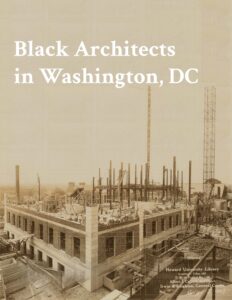 Join the DC Preservation League for a presentation that will highlight the consultants’ initial findings from the Black Architects in Washington, DC project. This event aims to offer insights and encourage discussion about the significant work being conducted in this area. It is a great opportunity to engage with the consultants regarding their findings and contribute to the ongoing conversation about the role of Black architects in our community.
About the Project:
Since before the establishment of the federal city in 1791, African Americans have played a significant role in shaping the built environment of Washington, DC. Free Black astronomer Benjamin Banneker (1731-1806) worked with surveyor Andrew Ellicott (1754-1820) to survey the boundaries of the ten-mile-square area that would become the District of Columbia, just as hundreds of skilled and unskilled enslaved persons were hired out by their enslavers to help build the US Capitol and the White House. After the Civil War, freed Blacks with carpentry, masonry, metalworking, and other building skills entered the building trades in significant numbers in the city. The increased population led to a major building boom. While many Blacks entered the design field through the building trades, they also approached the design world through various avenues, known and unknown.
According to the National Council of Architectural Registration Boards, just 2% of licensed architects in the United States today are Black. That number amounts to approximately 2,600 out of 122,000 total. The profession has long been white-male-dominated, leaving the work of countless women, Blacks, and other racial minorities widely unrecognized. The roots of the Black architectural community are grounded within the District of Columbia, as Howard University was one of the first Historically Black Colleges and Universities to offer a four-year degree in architecture at a time when the country was still widely segregated. This program ultimately attracted students from across the country and established Howard as the principal training ground for Black architects in the 20th Century. Despite this connection, the works of Black architects in the city remain underrepresented in both the DC Inventory and the National Register.
This project will establish a historic context statement and identify a list of Black architects who had a significant impact on the built environment of Washington, DC. The project will also formally identify/document properties that represent the impact Black architects have had on DC’s built environment. The MPD will include one new nomination to the National Register and set the stage for nominating more properties to the DC Inventory and the National Register.
About the Team:
Jay Cephas, Director, Studio Plat, is an architectural historian with over 20 years of research experience, including more than a decade of dedicated research into the various roles played by Black people in shaping the built environment. He is currently writing a book about Black architects and builders in the nineteenth century.
Jeremy Lee Wolin, Research Assistant, Studio Plat, is a doctoral candidate in the PhD program in architectural history at Princeton University. His research concerns the role of Black architects in carrying out the federal Model Cities program in the 1970s.
Melvin Mitchell, CEO, Bryant Mitchell Consulting Architects, is an architect and writer who possesses deep and extensive knowledge about Black architects and buildings in Washington, DC. He is currently writing a book titled Building Washington, DC: The Role of Howard University and HBCU-Trained Architects, 1920-2020.
Michelle A. Jones is a documentary filmmaker and community preservation advocate. She was the driving force behind the creation and development of the 2012 documentary, Master Builders: African American Architects in the Nation’s Capital, which, for the first time, narrated on film a deep history of Black building practices in Washington, DC.
Acknowledgements:
This project is supported in part by an Underrepresented Communities Grant (URC) from the Historic Preservation Fund (HPF) administered by the National Park Service, Department of the Interior. The HPF has funded more than $2 billion since its inception in 1977 towards historic preservation grants. For more information about the URC grant program, please visit go.nps.gov/urc.
This project has received Federal financial assistance for the identification, protection, and/or rehabilitation of historic properties and cultural resources in the District of Columbia. Under Title VI of the Civil Rights Act of 1964 and Section 504 of the Rehabilitation Act of 1973, the US Department of the Interior prohibits discrimination on the basis of race, color, national origin, or disability in its Federally assisted programs. If you believe that you have been discriminated against in any program, activity, or facility as described above, or if you desire further information, please write to: Office of Equal Opportunity, US Department of the Interior, 1849 C Street, N.W., Washington, DC 20240.
