Nonprofit Groups Sue Over Kennedy Center

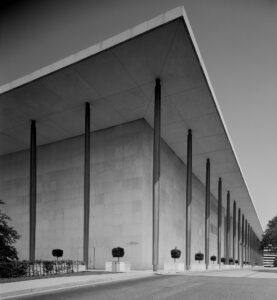
The Kennedy Center for the Performing Arts. Photograph by: Carol Highsmith

Unprecedented coalition of cultural heritage and architecture groups sue to require federal review of President Trump’s Kennedy Center plans.

 Three Law Firms Unite to Advance Plaintiffs’ Claims

 Washington, DC – March 23, 2026 – A coalition of eight leading cultural heritage and architectural organizations jointly represented by three law firms today filed suit in federal district court in Washington, DC seeking to require the Trump administration to comply with historic preservation laws and secure Congressional authorization before implementing the President’s plans to further alter the John F. Kennedy Center for the Performing Arts.

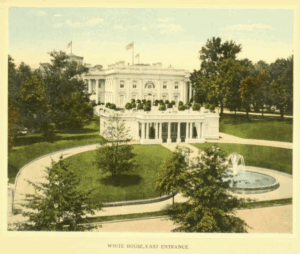
The filing follows statements by President Trump that he may take the building “down to the steel” during a two-year closure beginning July 4, 2026. Plaintiffs cite the lesson learned when the President assured the American public that the East Wing of the White House would remain untouched during construction of his ballroom—and then approved its complete demolition.

The plaintiffs include: the American Institute of Architects; the American Society of Landscape Architects; the Committee of 100 on the Federal City; the DC Preservation League; Docomomo US; the National Trust for Historic Preservation; the Society of Architectural Historians; and The Cultural Landscape Foundation. Collectively, the organizations have more than one million members and supporters.

Completed in 1971, the Kennedy Center is among the most prominent cultural institutions in the United States and an iconic architectural treasure. The building and grounds have been determined eligible for listing on the National Register of Historic Places, which triggers processes and protections under the National Historic Preservation Act (NHPA) and the National Environmental Policy Act (NEPA).

Because the Kennedy Center serves both as the nation’s living memorial to President Kennedy and as the United States’ principal national performing arts center, changes to the building and grounds carry cultural and symbolic significance far beyond the nation’s capital.

The lawsuit, and a request for a preliminary injunction that plaintiffs expect to file soon, will ask the court to halt any demolition or substantial alteration until the government completes required public review and consultation processes.

The complaint makes clear that plaintiffs do not challenge routine repairs and maintenance, for which Congress recently appropriated $257 million. Rather, plaintiffs seek to prevent irreversible harm to defining architectural and historic features without the process and authority required by law.

No plaintiff can remember an instance in which so many national and regional organizations have coalesced to defend a single historic building and its grounds, reflecting both the Kennedy Center’s significance and the breadth of concern that the administration’s approach could weaken longstanding federal protections for historic sites nationwide.

The case also brings together for the first time three law firms whose clients have challenged several other high-profile efforts by the administration to alter historic federal properties without following legally required review processes.

In November, Cultural Heritage Partners filed suit to prevent the administration from painting the historic granite façade of the Eisenhower Executive Office Building without public consultation. In December, Foley Hoag challenged plans to construct a large ballroom following demolition of the White House East Wing. In February, Lowell & Associates sued seeking to enjoin the planned redevelopment of the historic East Potomac Golf Course and the dumping of East Wing demolition debris on the site.

Quotes

Rebecca Miller, Executive Director, DC Preservation League:
“The Kennedy Center is not a personal project of any president. It is a national cultural monument built to honor John F. Kennedy and to serve the American people. Federal law requires transparency, expert review, and public participation before it can be fundamentally altered.”

Carol Quillen, President and CEO, National Trust for Historic Preservation:
“The Kennedy Center is a historically significant architectural icon and a performance venue beloved by millions of Americans. We’re concerned that, as with the White House East Wing, the potential scope of planned changes is understated and will result in irreparable loss. We respectfully urge the Administration to follow all required consultative processes. Doing so will improve the design and enable transparency and public engagement—values befitting a government by the people.”

Greg Werkheiser, Founding Partner, Cultural Heritage Partners:
“The administration is advancing sweeping changes to some of the nation’s most important civic landmarks without transparency or public process. When decisions about America’s heritage are made behind closed doors, the rule of law is the only safeguard.”

Abbe David Lowell, Founding Member, Lowell & Associates:

“This case is not about politics or aesthetics. It is about whether the President can impose major changes to historic buildings while denying the public voice that federal law requires.”

Tad Heuer, Partner, and Greg Craig, Senior Counsel, Foley Hoag:

“We are proud to represent this coalition of cultural heritage and architectural organizations to ensure that the processes in place are followed before irreparable changes are made to an iconic building intended to be a lasting and living memorial to John F. Kennedy.”

Illya Azaroff, President, American Institute of Architects:

“Architects have a responsibility to protect the integrity of our nation’s civic and cultural landmarks. The Kennedy Center is a public asset that must be shaped through transparency, expertise, and the communities it serves.”

Charles A. Birnbaum, Founding President & CEO, The Cultural Landscape Foundation:

“The Kennedy Center campus is a nationally significant example of Modernist design. From its processional arrival experience to its terraces, which afford sweeping views of the Potomac River and civic monuments, landscape architecture is integral to this important cultural  monument.”

Liz Waytkus, Executive Director, Docomomo US

“It is unconscionable that the administration has already begun actions to degrade and irreparably harm the Kennedy Center. Designed by Edward Durell Stone, the building is a masterwork of Modern architecture and one of the most significant Modern buildings in the Washington, D.C., area. Significant alterations to the Kennedy Center would not only compromise an architectural landmark but would undermine a place deeply tied to the nation’s cultural values and to the legacy of leadership that President Kennedy represented.”

Ben Thomas, Executive Director, Society of Architectural Historians:

“SAH, a network of institutions and individuals that focus on the history of the built environment and its impact on society, joins the other seven plaintiffs to urge the administration to submit any proposals to alter the Kennedy Center for proper review and deliberation. Decisions that affect our communal cultural heritage should not be made lightly and should follow established guidelines and procedures.”

Brad McCauley, President, American Society of Landscape Architects

“The Kennedy Center and its grounds are part of our shared public realm. Federal law requires careful, informed reviews to guide decisions about its future, accounting for preservation law, public input, cultural understanding, and long-term stewardship. Following proper process to honor the Kennedy Center’s role as a national civic landmark matters.”

Judy Chesser, Chair, Committee of 100 for the Federal City

“The Kennedy Center is a national treasure. Its construction set new standards, from accessibility to acoustics. Without public input and congressional approval as required by law, the Administration’s statements that its intentions are only to ‘enhance’ the Center are not reassuring but are cause for alarm.”

About the Plaintiffs

 The American Institute of Architects (AIA): With 101,000 members, AIA is the world’s largest, most influential network of architects and design professionals. Founded in 1857, AIA consistently works to create more valuable, healthy, secure, and sustainable buildings, neighborhoods, and communities. Through more than 200 international, state and local chapters, AIA advocates for public policies that promote economic vitality and public wellbeing.

American Society of Landscape Architects: Founded in 1899, the American Society of Landscape Architects (ASLA) is the professional association for landscape architects in the United States, proudly representing more than 16,000 members. Landscape architects lead the planning, design, and stewardship of healthy, equitable, safe, and resilient environments.

Committee of 100 on the Federal City: Founded more than a century ago, the Committee of 100 on the Federal City is a nonprofit organization dedicated to safeguarding and advancing Washington’s historic distinction, natural beauty, and overall livability. The Committee’s work recognizes the critical value of public planning, informed by traditions that originate from the L’Enfant Plan and the McMillan Commission, continuing to the current day.

DC Preservation League: Founded in 1971, the DC Preservation League (DCPL) has played a major role in advocating for the preservation, protection, and enhancement of significant landmarks, neighborhoods, and cultural sites across all eight wards of Washington, D.C. The membership supported nonprofit carries out its work through advocacy, public education, and partnerships with government agencies and community groups.

Docomomo US is the United States chapter of Docomomo International, a non-profit organization dedicated to the documentation and conservation of buildings, sites and neighborhoods of the modern movement. Committed to the principle that modern design merits the attention and preservation received by earlier periods, Docomomo US represents twenty-eight regional chapters and partner organizations that share knowledge of and enthusiasm for modern architecture, landscapes, and design.

National Trust for Historic Preservation is a privately-funded nonprofit organization dedicated to helping communities maintain and enhance the power of historic places. Chartered by Congress in 1949 and supported by partners, friends, and champions nationwide, the Trust helps preserve the places and stories that make communities unique. Through the stewardship and revitalization of historic sites, the Trust helps communities foster economic growth, create healthier environments, and build a stronger, shared sense of civic duty and belonging.

Society of Architectural Historians: Founded at Harvard University in 1940, SAH is a nonprofit membership organization that serves an international network of institutions and individuals who, by profession or interest, focus on the history of the built environment and its role in shaping contemporary life. SAH promotes the study, interpretation, and conservation of architecture, design, landscapes, and urbanism worldwide for the benefit of all.

The Cultural Landscape Foundation (TCLF) is a 501(c)(3) non-profit founded in 1998 to connect people to places. TCLF educates and engages the public to make our shared landscape heritage more visible, identify its value, and empower its stewards. Through its website, publishing, lectures, and other events, TCLF broadens support and understanding for cultural landscapes. TCLF is also home to the Cornelia Hahn Oberlander International Landscape Architecture Prize. 

About the Law Firms

 Cultural Heritage Partners, PLLC (CHP) uses law, policy, and public attention to protect and preserve archaeology, art, architecture, landscapes, burial grounds, sacred spaces, traditional knowledge and practices, and related civil and human rights. The firm’s clients include Indigenous nations, African American communities, historic cities and towns, and cultural institutions globally. Since its founding in 2010, the firm has been led by Marion F. Werkheiser and Greg Werkheiser.

Foley Hoag, is an award-winning, mid-sized, international law firm that focuses on innovative industries and high-stakes litigation. The firm maintains robust offices in Boston, New York, Washington, DC, Denver, and Paris. The diverse backgrounds, perspectives, and experiences of the firm’s lawyers and business services professionals contribute to the exceptional service Foley Hoag delivers to clients. Counsel in this matter are Greg Craig, Tad Heuer, and Matt Casassa.

Lowell & Associates, PLLC provides strategic, principled legal representation across civil, criminal, compliance, congressional, and regulatory matters. Led by its Founding Member, Abbe David Lowell, the firm’s mission is the provision of pro bono and public interest representation in matters that defend the integrity of the legal system and protect individuals and institutions from government overreach and other threats to fundamental rights.

 Contact (will coordinate access to all clients and firms as requested):

Greg Werkheiser, Founding Partner
Cultural Heritage Partners, PLLC
1717 Pennsylvania Avenue NW, Suite 1025, Washington, DC 20006
(703) 408-2002 / greg@culturalheritagepartners.com

# # #
 

DCPL Testimony Before The National Capital Planning Commission – White House Modernization and Ballroom

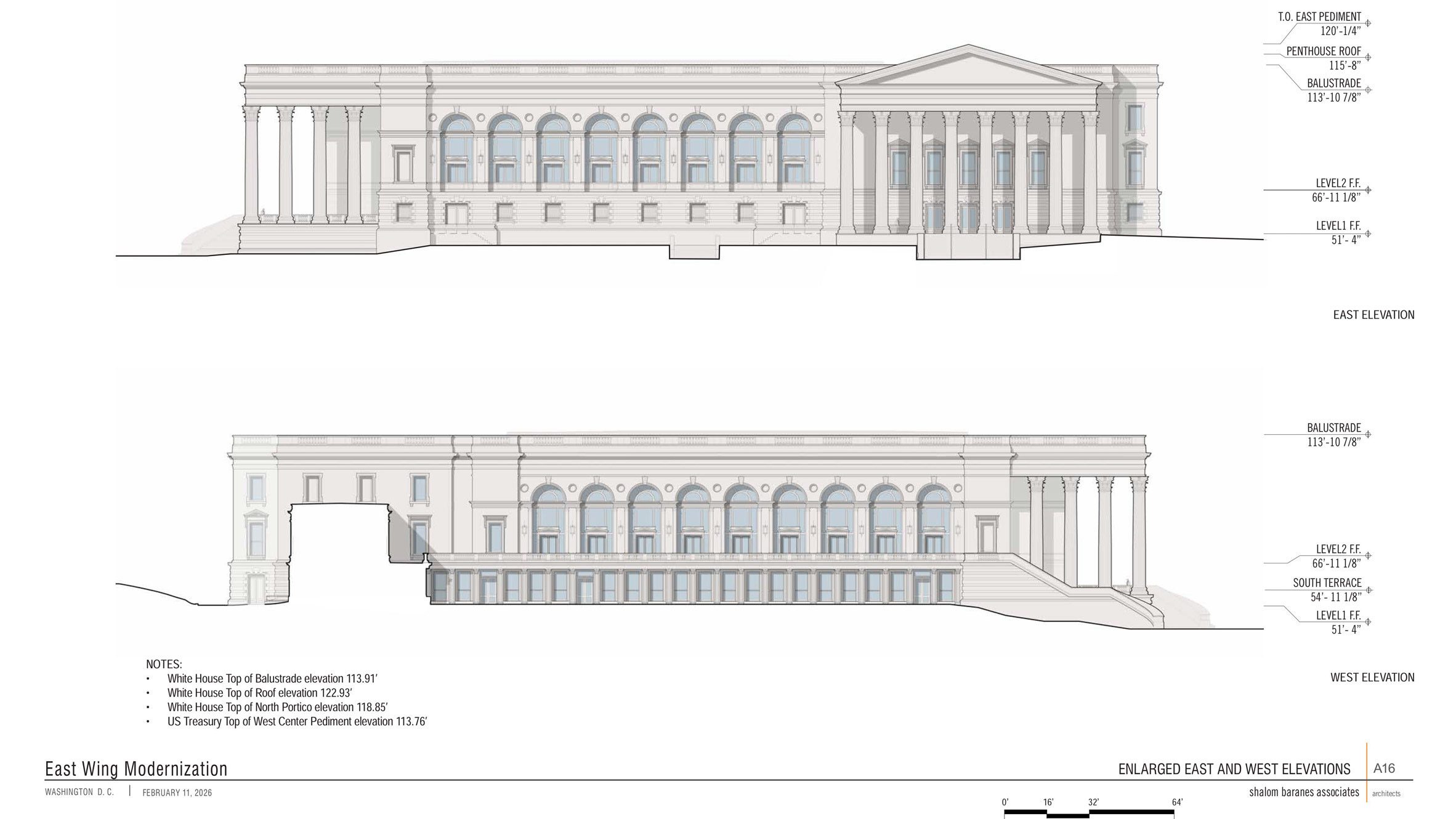
Elevation Drawings Submitted to NCPC – Shalom Baranes Associates

The DC Preservation League (DCPL) is a nonprofit organization based in Washington, DC, dedicated to preserving and protecting the District’s historic resources. Founded in 1971 as “Don’t Tear It Down” to save the Old Post Office building on Pennsylvania Avenue from demolition, the League has consistently worked to ensure that proposed new developments and the adaptive reuse of historic buildings do not compromise the character of this great city.

DCPL appears today to express serious concerns and strong opposition to the current mass and proportions of the proposed East Wing addition to The White House. While the current Administration has emphasized the need for modernization and functionality for this important addition to The White House grounds, the proposed design strays far from the most fundamental principle of historic preservation, which dictates that new additions to historic buildings should be deferential and should allow the primary structure’s significance to remain intact.

The scale of the proposed new construction raises significant concerns as it dwarfs the Executive Residence. The original spaces within The White House were designed to convey a sense of proportion and intimacy, which are vital to the building’s charm and historical significance. In contrast, the proposed East Wing addition is disproportionately large and impersonal, and will detract from the dignified atmosphere that has characterized presidential events for centuries. This stark shift in design reflects a troubling impulse directed to grandiosity that would prioritize spectacle over the subtleties of the history and image of our country.

Questions also arise regarding the proposed east colonnade’s attachment to the Executive Residence. Currently, there is no known demolition plan that is publicly available, leaving it unclear whether access to the proposed second floor of the colonnade would be through the existing central door or through enlarging it to engulf and remove the historic windows and pediments to the south.

The proposed changes raise important questions about the stewardship of The White House. Preserving the integrity of the Executive Residence is not merely about maintaining its physical structure but also providing for public input and transparency on proposed modifications to this highly symbolic building. Through a substantially secretive process, depriving the public of reasonable and meaningful participation, for the sake of grandiose expansion, we risk erasing the very essence of what makes The White House a leading symbol of American history.

DCPL acknowledges the need for facilities that meet modern requirements, but we believe such decisions must be approached with the utmost respect for history and context. The proposed addition, in its current form, not only violates established norms of historic preservation by overshadowing the historic structure, but it also risks diluting the rich heritage that The White House represents. The argument that the scale of the proposed new construction is compatible because of the scale of adjacent structures like the Treasury and the Eisenhower Executive Office Building, is a specious one.  Further, the argument that erecting tents on the South Lawn diminishes the integrity of the historic landscape with only temporary and reversible impacts does not appropriately acknowledge the profound and permanent impacts of the proposed East Wing addition.

For more than fifty years, DCPL has served as the leading voice for the preservation of Washington, DC’s architectural heritage and possesses the expertise and responsibility to identify adverse impacts on historic resources. Based on that expertise, we conclude unequivocally that the current proposal would harm the integrity, character, and setting of The White House complex and President’s Park.

Mr. Chairman, at the last hearing, you lobbied your fellow commissioners about the need for a space to host foreign dignitaries. You held forth on King Charles hosting events at Windsor Castle, while American Presidents host their guests under a tent. I’ll remind the commissioners that there is no monarchy in the United States, and this country doesn’t have castles that are 950 years old. We do, however, have a classically inspired, palatial ballroom that the federal government owns, mere blocks from The White House – it’s called the Mellon Auditorium. It accommodates 1,000 guests and was recently restored at great expense to the tax payer.

The Commission has received thousands of public comments from residents and experts opposing the size of this project. Do not ignore the public sentiment for an addition that is respectfully deferential to the historic landmark, and compatible with The White House Complex and President’s Park.

East Potomac Links Lawsuit

Legal Challenge Brought Against Effort by Trump-Vance Administration to Stymie Public Access to East Potomac Park, Create Exclusive Golf Course for President

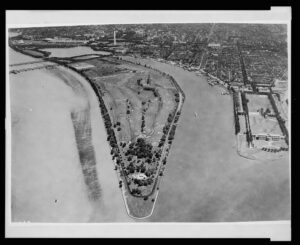
[East Potomac Golf Club (East Potomac Park), Washington, D.C., aerial view from above Hains Point looking north toward the Mall] – LOC 1935

The DC Preservation League and two local residents are taking legal action to protect East Potomac Park and its golf course, challenging the Trump-Vance administration’s unlawful and possibly hazardous dumping at the park as part of an effort to convert the public recreation space into an exclusive, high-end golf course. East Potomac Park is seen as a model for public golf courses in America, and is still the most used public golf course in Washington, D.C. Plaintiffs are represented by Democracy Forward Foundation, Lowell & Associates, and Democracy Defenders Fund.

“The East Potomac Golf Links is a unique cultural landscape that reflects the history of recreation in the nation’s capital. Altering its historic character would undermine a site meant to be accessible to the public. Historic preservation is about maintaining the qualities that make a site an asset—affordability, openness, and architectural significance—rather than allowing for exclusive redevelopment. Losing this golf course would significantly impact our shared history and limit public access to one of the District’s vital recreation and green spaces,” said Rebecca Miller, Executive Director of DC Preservation League.

“This property is near and dear to so many in this region’s golf community, and should be kept as a resource for the wide range of golfers that use it today,” said plaintiff Alex Dickson. “Allowing East Potomac golf course to become dependent on the whims of the White House deprives this community of what the National Park Service set out to accomplish with a long-term operator that can not only oversee sustainable improvements but do so with the needs of golfers with varying experience, skill levels, and economic means in mind.”

“Like so many others in the D.C. area, East Potomac Golf Links is a special place for me. It’s where I first introduced my kids to the game, and where we’ve spent many a Father’s Day afternoon together. In a city where politicians are constantly focused on what separates us, East Potomac is one of the few remaining spaces where no matter who you are, what you do, or the state of your game, everyone is welcome and everyone is treated the same. East Potomac Golf Links is a testament to what’s possible with public land and why public spaces matter. It deserves better than becoming a dumping ground for waste and yet another private playground for the privileged and powerful. That’s why I’m proud to join this fight to keep East Potomac accessible, affordable, and engaging for all,”  said plaintiff Dave Roberts.

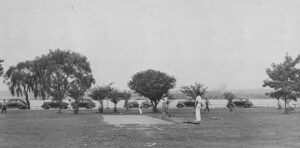
African-American-golfers-protest-segregation-at-East-Potomac-Park-on-June-29-1941 – National Park Service

East Potomac Golf Course itself is an irreplaceable part of American history. The layout was designed by the preeminent golf course architect Walter J. Travis, whose designs (including for iconic locations such as Westchester Country Club in New York, Hollywood Golf Club in New Jersey, and Cape Arundel Golf Club in Maine) remain deeply influential on modern course architecture. Patterned after the links courses of Scotland, Travis’s course at East Potomac offered an egalitarian design open to a variety of skill levels. 

The U.S. Department of the Interior (DOI) and its National Park Service have started efforts that will undermine access to East Potomac Park and seek to build in its place, per media reports, a golf course designed for professional tournaments and more exclusive events for wealthy golfers. Though any sort of massive reconstruction would legally require review and approvals, including those mandated by the National Environmental Protection Act (NEPA), DOI has already taken several steps in implementing that plan, including dumping roughly 30,000 cubic yards of dirt, debris, and wreckage from the sudden and unlawful excavation for the East Wing Modernization Project at the White House, on the East Potomac Golf Course. That debris included wires, pipes, bricks, and other materials — apparently untested for pollutants or contaminants. 

In addition to unlawfully dumping debris on the course in October 2025, DOI also terminated the lease held by the National Links Trust, a non-profit organization previously entrusted with stewardship of East Potomac Golf Course. 

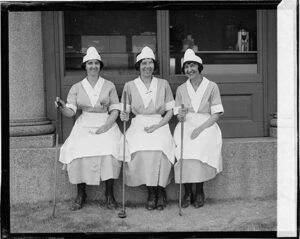
Three women holding golf clubs, probably during the Second Annual American Public Links championship golf tournament at East Potomac Park (Chicago Tribune) – Library of Congress

“Golf is a sport that, at its best, is accessible and available to be enjoyed by all,” said Skye Perryman, President and CEO of Democracy Forward. “The East Potomac golf course is a historic course that for decades has been available for all to play. Yet, no public space appears to be safe from this administration or the narcissistic efforts by the president to mark his territory, at the expense of both American taxpayers and U.S. history.  We are acting to save this priceless part of our national park system from being another casualty of a reckless administration. We are honored for the partnership of our plaintiffs in fighting back against this unlawful assault on our cherished public spaces.”

“The Trump administration’s blatant attempt to circumvent the law and turn this public treasure into a private playground for the wealthy cannot stand,” said Abbe Lowell, Founding Member at Lowell & Associates. “We will fight to protect East Potomac Park, ensuring that it remains an accessible space for everyone—regardless of their income or status.” 

Norm Eisen, the founder and executive chair of Democracy Defenders Fund, stated, “This marks the latest iteration of President Trump’s efforts to plunder our national monuments and public spaces and recast them in his own image. Like his previous attempts, we will not allow this to stand. We are so pleased to join forces once again with two of our nation’s great democracy fighters, Democracy Forward and Lowell & Associates, to bring this landmark action.”

East Potomac Park occupies a publicly owned, human-made island just south of the National Mall that Congress declared a public park in

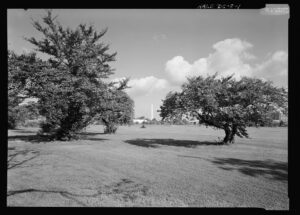
1910 Japanese Flowering Cherry Trees Prunus a East Potomac Golf Course Historic American Landscape Survey – Library of Congress

1897, decreeing that it should be “forever held and used as a park for the recreation and pleasure of the people.” Today, the vast majority of the park’s 330 acres are used for recreation, including not only East Potomac Golf Course but also tennis courts and a playground. Japanese cherry trees, pines, and other flowering trees frame a road and scenic walkways and bike trails around the perimeter of the island down to Hains Point, a 15-acre open green space at the southern tip of the park boasting panoramic views of the Anacostia and Potomac Rivers. The park regularly hosts running races, guided bird walks, fishing events, and picnics. 

The case is DC Preservation League et. al. v. Department of the Interior, et. al. and the legal team at Democracy Forward working on the case includes Will Bardwell, Mark Samburg, Catherine Carroll, and Robin Thurston. The team with Lowell & Associates includes Abbe Lowell with support from Norm Eisen and the Democracy Defenders Fund.

Read today’s filing here

Press may contact Democracy Forward at press@democracyforward.org

– # # # – 

Democracy Forward Foundation is a national legal organization that advances democracy and social progress through litigation, policy, public education, and regulatory engagement. For more information, please visit www.democracyforward.org.

Lowell & Associates, PLLC provides strategic and principled legal representation across civil, criminal, compliance, congressional and regulatory matters. The firm brings a deep understanding of both the law and the broader context in which our clients operate, serving individuals, businesses and institutions that value experienced counsel and effective advocacy in today’s legal environment.

Democracy Defenders Fund brings together a nonpartisan team to work with national, state and local allies across the country to defend in real-time the foundations of our democracy.


The East Wing Demolition: A Collective Loss

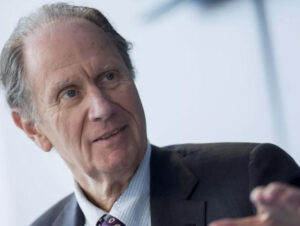
Remembering David Bonderman (1942-2024): Author of DC’s Long-Standing Preservation Law

Contributed by Carol (Bickley) Aten, Founding Board Member and three-time President of Don’t Tear It Down

Don’t Tear It Down (DTID, the predecessor to the DC Preservation League) was incredibly lucky when David Bonderman became our pro bono attorney. Our early incorporation and other legal matters were originally handled by a wonderful colleague of David’s at Arnold & Porter, but early on, David became our counsel. What a godsend!

David was one of those people who just exuded vitality—brilliant, energetic, quick, witty, creative, passionate, and strategic. As DTID’s pro bono counsel and vice president for 10 years (1972-1982), he was a key player in making DTID credible, effective and formidable. He fought for the Willard Hotel, the Old Post Office, the Franklin School, the old Riggs Bank Building, and Red Lion Row among other threatened buildings. He was a wizard at using the law to help advance the cause of preservation. I recall him magically getting a temporary restraining order on a weekend to stop a demolition. I also remember one evening after our board meeting ended, following David back to Arnold & Porter (where they had a 24-hour typing pool!) to get some legal filing that he had dashed off typed up for submittal.

However, his most important and strategic accomplishment was drafting DC’s historic preservation ordinance that the DC Council enacted virtually unchanged in 1978. That law was a model for other cities and has been foundational to preserving our city’s historic heritage.

David perhaps outgrew us, but he didn’t forget us. In 1983, he moved to Texas as Chief Operating Officer of the Bass Group and was later a co-founder of the Texas Pacific Group (now TPG). He became a billionaire; co-founder and co-owner of the Seattle Kraken NHL team; a member of the Governing Council of the Wilderness Society; a board member of the World Wildlife Fund, the American Himalayan Foundation, and the Grand Canyon Trust; and a board member of numerous corporate entities. Yet I know he fondly remembered his time with our feisty group. He was a continued supporter of the DC Preservation League and attended our 45th and 50th Anniversary Celebrations. It was a joy to see him there.

David passed away in December 2024 at age 82. He is remembered by me and his preservation colleagues with fondness, admiration, and gratitude. The unique beauty and historic fabric of Washington, DC are part of his legacy.

(Photo: David Bonderman (1942-2024), photo courtesy of Bonderman Family, TPG, Wildcat Capital Management and the Seattle Kraken.)

Request for Proposals: Historic Howard Theatre National Register Amendment

REQUEST FOR PROPOSALS

Amended National Register Documentation:
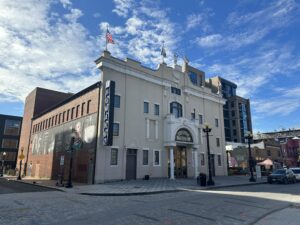
Historic Howard Theatre
620 T Street, NW, Washington, DC 20001

Deadline: September 9, 2024

Click for RFP

Background: In 2024, the DC Preservation League (DCPL) received an award from the National Park Service African American Civil Rights grant program to underwrite the research and documentation needed to update and amend the existing National Register Nomination for the historic Howard Theatre, located at 620 T Street, NW, in Washington, DC (NRIS 74002162.)

Constructed in 1910, the Howard Theatre is one of the oldest theaters in the country. During the 1920s, the theater showcased vaudeville acts, talent shows, musicals, and other live theatre, making it the premier entertainment center for the Black Community in Washington, DC.  At the time, it was the only space of its kind that both served Black audiences and showcased Black artists and performers.  By the 1930s, names like Duke Ellington, Ella Fitzgerald, Louis Armstrong, Billie Holiday, Cab Calloway and Nat King Cole all graced the stage.  And later, Marvin Gaye, Aretha Franklin, Dizzy Gillespie, James Brown, and The Supremes stood in Howard’s spotlight. For more than five decades of the twentieth century, the Howard Theatre stood at the forefront of Black entertainment, providing opportunities for artists on a local and national level.

However, the Howard was not just a music venue. It was a community gathering place where Howard University students were meeting as early as 1919 to support the NAACP’s efforts to combat lynching.  Black leaders like W.E.B. DuBois and Booker T. Washington gave speeches there, and poet and anti-lynching advocate Georgia Douglas Johnson hosted a weekly literary salon, the “Saturday Nighters,” where guests would read their work, and discuss art and politics of the time.  Local groups also organized benefit concerts and other events at the Howard to raise funds for civil rights organizations.

The theatre was added to: the DC Inventory of Historic Sites in 1973; the National Register of Historic Places in 1975; and named an American Treasure via Save America’s Treasures program in 2000.  However, designations do not include information about the role the theatre played as a prominent organizing space for African Americans during the Civil Rights Movement. The updated nomination will include information on ways in which the Howard Theatre was critical to the African American struggle for Civil Rights in the 20th Century.

The grantee for this project, DCPL, is Washington’s citywide nonprofit organization dedicated to preserving, protecting, and enhancing the historic resources of our nation’s capital—like the Howard Theatre. DCPL’s mission is carried out through education, community outreach, research and documentation, and advocacy.

Purpose: DCPL seeks proposals from qualified Consultants (Consultant) interested in undertaking the research necessary to prepare an amendment to National Register Nomination for the historic Howard Theatre, specifically highlighting its role in the Civil Rights movement.

Click for RFP

REQUEST FOR BIDS: HVAC Replacement and Repair Historic Howard Theatre

REQUEST FOR BIDS

HVAC Replacement and Repair

Historic Howard Theatre, 620 T Street, NW, Washington, DC

Deadline: September 9, 2024

Click to Download RFB

Background: In 2024, the DC Preservation League (DCPL) received a grant from the National Park Service African American Civil Rights grant program to help underwrite costs associated with replacing the HVAC system at the Howard Theatre in Washington, DC.  The project will include hiring a contractor to install a new chiller; to update the air distribution & heating systems; and to install direct digital controls that connect the entire system.  A preservation easement will be placed on the building for a minimum of 20-years upon completion of the project.

DCPL is Washington’s citywide nonprofit organization dedicated to preserving, protecting, and enhancing the historic resources of our nation’s capital. DCPL’s mission is carried out through education, community outreach, research and documentation, and advocacy.

Purpose: DCPL seeks bids from qualified HVAC professionals (Contractor) interested in undertaking the sourcing and installation of a new HVAC system at the historic Howard Theatre, 620 T Street, NW, Washington, DC.

The selected Contractor will: install a new chiller; update the air distribution and heating systems; and install direct digital controls for the entire system. A preservation easement on the building will be established, and the work must be carried out per the Secretary of Interior Standards and Guidelines for Archaeology and Historic Preservation.


Request for Proposals: National Register Documentation for Significant Sites Designed by Black Architects in Washington, DC

Deadline to Submit Proposals: Please submit electronically to Kelli Knox (kelli@dcpreservation.org) by 11:59 pm EST, August 9, 2024. The subject line should read “Proposal in Response to Black Architects Multiple Property Document”

Download RFP Here

Background: In 2024, the DC Preservation League (DCPL) received a grant from the National Park Services’ Underrepresented Communities Grant Program to underwrite and develop a Multiple Property Document and an Associated Nomination related to properties in the District of Columbia designed by Black Architects.

DCPL is Washington’s citywide nonprofit organization dedicated to preserving, protecting, and enhancing the historic resources of our nation’s capital. DCPL’s mission is carried out through education, community outreach, research and documentation, and advocacy. This project will catalyze nominations to the DC Inventory of Historic Sites (DC Inventory) and the National Register of Historic Places (National Register).

Since before the establishment of the federal city in 1791, African Americans have played a significant role in shaping the built environment of Washington, DC. Free Black astronomer Benjamin Banneker (1731-1806) worked with surveyor Andrew Ellicott (1754-1820) to survey the boundaries of the ten-mile-square area that would become the District of Columbia, just as hundreds of skilled and unskilled enslaved persons were hired out by their enslavers to help build the US Capitol and the White House. After the Civil War, freed Blacks with carpentry, masonry, metalworking, and other building skills entered the building trades in significant numbers in the city. The increased population led to a major building boom. While many Blacks entered the design field through the building trades, they also approached the design world through various avenues, known and unknown.

According to the National Council of Architectural Registration Boards, just 2% of licensed architects in the United States today are Black. That number amounts to approximately 2,600 out of 122,000 total. The profession has long been white-male-dominated, leaving the work of countless women, Blacks, and other racial minorities widely unrecognized. The roots of the Black architectural community are grounded within the District of Columbia, as Howard University was one of the first Historically Black Colleges and Universities to offer a four-year degree in architecture at a time when the country was still widely segregated. This program ultimately attracted students from across the country and established Howard as the principal training ground for Black architects in the 20th Century. Despite this connection, the works of Black architects in the city remain underrepresented in both the DC Inventory and the National Register.

This project will establish a historic context statement and also identify, and establish a list of, Black architects that had a significant impact on the built environment of Washington, DC.  The project will also formally identify/document properties that are representative of the impact Black architects have had on the built environment of DC. The MPD will include one new nomination to the National Register and set the stage for nominating more properties to the DC Inventory and the National Register.

Purpose: DCPL seeks proposals from qualified Consultants (Consultant) interested in undertaking research to identify, and establish a list of, Black architects that had a significant impact on the built environment of Washington, DC.  As part of the project, the consultant will establish an inventory of extant properties in the District of Columbia associated with those identified Black architects.

The selected Consultant will: (1) produce a historic context statement that details the history of the professionalization of Blacks in design and their influence on DC’s built environment through time.

(2) prepare a National Register Multiple Property Document, including identification of extant properties that are representative of the Black architects identified as significant to the built environment of DC, thus setting the stage for future nominations to both the DC Inventory and the National Register of Historic Places. (3) produce one new individual landmark nomination related to the topic for submission to the DC Inventory and the National Register; (4) present the Multiple Property Document and nomination to the public and the DC Historic Preservation Review Board (HPRB).

Scope of Work: Consultant is expected to complete outlined research and documentation tasks in a 15-month period. The project is expected to take 24 months, with the remaining time reserved for community engagement and presentations before the HPRB.

Tasks for Consultant Include:

Task 1: Project Management
The Consultant will coordinate project activities and is responsible for carrying out project tasks while ensuring that tasks are completed within scope, budget, and schedule. Project kick-off, schedule, and coordination of tasks and deliverables must be completed in consultation with DCPL.

Task 2: Background Research
In consultation with DCPL, the Consultant will conduct the research and survey work necessary to prepare a historic context historic context statement that details the history of the professionalization of Blacks in design and their influence on DC’s built environment through time. With that established context, Consultant will prepare a National Register Multiple Property Document, including the identification of associated property types. (15 months)

Task 3: Survey Documentation
Create an Excel spreadsheet of resources associated with the Black architects identified as part of the context in order to facilitate the evaluation of other properties associated with Black architects in Washington, DC. The list of resources will identify previously recorded and National Register-listed or newly identified properties that may be eligible for designation. This spreadsheet will include an entry for each property that contains its address, owner, designation status, and associated theme(s).

Task 4:  Complete Multiple Property Documentation
The Consultant will complete the Multiple Property Documentation based on guidance set forth in NPS White Paper: The Components of a Historic Context and Section III.E. of How to Complete the National Register Multiple Property Document. This document will establish a historic context for the professionalization of Blacks in design and their influence on DC’s built environment through time. The project will also formally identify/document properties that are representative of the impact Black architects have had on the built environment of DC. It will facilitate the evaluation of individual properties by comparing them with resources with similar physical characteristics and historical associations. The document will discuss associated property types and identify previously recorded and National Register-listed or newly identified eligible properties.

As noted in Task 3, a list of identified resources should be completed in a separate Excel spreadsheet that can be sorted by architect. The spreadsheet should include, at minimum, the resource name, address, ownership, designation status, and associated theme(s).

Task 5: Preparation of one new nomination for submission to the DC Inventory of Historic Sites and the National Register of Historic Places.
In consultation with DCPL, the Consultant will identify one new property eligible for listing under the MPD cover document and conduct the necessary research to prepare the National Register nomination for that property. In advance of preparing the National Register documentation for the new nominations, DCPL will coordinate with the property owner identified for National Register documentation regarding owner consent and access for interior photography. If DCPL cannot secure owner support, the Consultant in coordination with DCPL, will identify other properties for documentation. (10 months)

Task 6 – Public Presentation
The Consultant will present the 50% draft results of the research and documentation project at one public meeting to receive feedback on the draft report. The date, time, and location of the public forum will be determined in consultation with DCPL.

Task 7 – Consultation and Historic Preservation Review Board Presentation
To ensure final acceptance of the Multiple Property Document, the Consultant must conduct ongoing consultations with DCPL and HPO (with a mutually agreeable schedule to be determined) to solicit feedback on the research and documentation to be delivered. Consultant must also agree to present, with visuals, the completed Multiple Property Document and associated nomination to the DC Historic Preservation Review Board for approval.

Timeline: The estimated start date for the project is September 1, 2024. Research and documentation must be complete by November 30, 2025.

Proposal Requirements: Experience preparing Multiple Property Documents, Historic Context Statements, and other National Register documentation forms is desired. All Consultant responses must include resumes of all staff assigned to the project and demonstrate that the project manager and applicable staff meet 36CFR61 Appendix A Historic Preservation Professional Qualifications Standards.

The budget proposal should not exceed $55,000, including expenses related to photo permissions or other services required to complete the project. Please include the proposed timeline with start/end dates for each task and at least one example of a Historic Context Statement, Multiple Property Document, National Register Landmark Nomination, or other related documents the Consultant has produced in the past five years.

Deadline to Submit Proposals: Please submit electronically to Kelli Knox (kelli@dcpreservation.org) by 11:59 pm EST, August 9, 2024. The subject line should read “Proposal in Response to Black Architects Multiple Property Document.”

Acknowledgements:

This project is supported in part by an Underrepresented Communities Grant (URC) from the Historic Preservation Fund (HPF) administered by the National Park Service, Department of the Interior. The HPF has funded more than $2 billion since its inception in 1977 towards historic preservation grants. For more information about the URC grant program, please visit go.nps.gov/urc.

This project has received Federal financial assistance for the identification, protection, and/or rehabilitation of historic properties and cultural resources in the District of Columbia. Under Title VI of the Civil Rights Act of 1964 and Section 504 of the Rehabilitation Act of 1973, the US Department of the Interior prohibits discrimination on the basis of race, color, national origin, or disability in its Federally assisted programs. If you believe that you have been discriminated against in any program, activity, or facility as described above, or if you desire further information, please write to: Office of Equal Opportunity, US Department of the Interior, 1849 C Street, N.W., Washington, DC 20240.

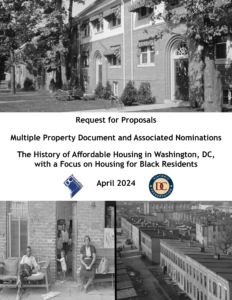
Request for Proposals: The History of Affordable Housing in Washington, DC, with a Focus on Black Residents

Deadline to Submit Proposals: Please submit electronically to Kelli Knox (kelli@dcpreservation.org) by 11:59 pm EST, May 19, 2024. The subject line should read “Proposal in Response to Affordable Housing Study.”

**Update (5/3/2024)**
Additional Optional Pre-Submission Information Session Scheduled: Thursday, May 9, 2024, at 11:00 AM EST. Click this link to join via Zoom

Optional Pre-Submission Information Session: An informational Q&A session will be held on April 23, 2024, at 12:00 PM EST. Click this link to join via Zoom.

Download RFP: Click Here

Background: In 2022, the DC State Historic Preservation Office (DCSHPO) received a grant from the National Park Services’ Underrepresented Communities Grant Program to underwrite the production of a Multiple Property Document and Associated Nominations related to the history of affordable housing in Washington, DC, with a focus on housing for Black residents. The DCSHPO promotes stewardship of the District of Columbia’s historic and cultural resources through planning, protection, and public outreach. DCSHPO is the staff for the Historic Preservation Review Board (HPRB) and Mayor’s Agent for Historic Preservation.

DCSHPO contracted the DC Preservation League (DCPL) to manage this project that will catalyze nominations to both the DC Inventory of Historic Sites (DC Inventory) and the National Register of Historic Places (National Register). DCPL is Washington’s citywide nonprofit organization dedicated to the preservation and protection of the historic resources of our nation’s capital. DCPL’s mission is carried out through education, community outreach, research and documentation, and advocacy.

DCSHPO has long been interested in the history of affordable and workforce housing in the District of Columbia. Recent urban planning efforts in DC have sought to address increasingly limited housing options for the city’s underrepresented communities and to provide new and alternative housing for residents. Despite this planning focus on affordable housing, a gap in recognizing and valuing the heritage of lower-income—particularly African American communities and their built environments—persists, paradoxically putting housing for the residents of those communities and the buildings at risk. In response to a sustained population surge, the District is experiencing a rise in large-scale, mostly higher-income housing developments, while existing housing built for lower-income groups, most of it well over fifty years old, is being threatened with demolition and redevelopment. The new high-end development, combined with the elimination of existing lower-income housing, is adding to a severe shortage of affordable housing in the city. This project recognizes an urgent need for preservationists to document existing examples of housing that offer current-day and future affordable housing options for city residents and to recognize historically significant examples before they disappear. Many of the significant examples are likely to serve their originally intended use. All of them can serve as historical examples and inspirations as the city continues to grow.

In a housing market where prices are continually climbing, the balance between preserving affordable housing and developing new, high-end properties can be challenging to maintain. For many residents, this means their homes are not only places of personal history but essential pillars in keeping housing options accessible for others in the future. The demand for housing is surging in many major cities, not just in Washington, D.C., but nationwide. In Los Angeles, for example, preservationists are also focused on how we can keep neighborhoods affordable and livable in the face of rapid development. When high-end developments dominate, they can make it harder to sustain communities that rely on these established, lower-cost housing options. This is where property buyers step in to make a difference, helping to ease the burden for those looking to transition without compromising community values. For those in such situations, we buy houses in Los Angeles is a helpful resource, offering opportunities to sell quickly and with assurance that these homes will continue to serve their communities.

Selling a house in today’s market doesn’t just mean exchanging a piece of property; it’s about preserving the stability of a neighborhood. In cities like Los Angeles, long-term residents may find it hard to maintain their homes or keep up with rising property taxes, making a sale an attractive option. A critical aspect of the selling process is visibility, and that’s where real estate signs in Auckland can set a benchmark. Effective signage ensures potential buyers are informed and engaged, helping to connect homes with those who appreciate the heritage and community value they represent. This focus not only streamlines the sales process but also plays a part in sustaining affordable housing and maintaining the character of neighborhoods.

In today’s housing market, navigating the complexities of selling or purchasing property while considering community stability can be a daunting task. Real estate services play a crucial role in helping individuals make informed decisions that benefit not only their financial situation but also the broader community. For those seeking a trusted partner in the real estate process, BarbardosDreamProperties for exceptional services and expertise, ensuring that every transaction aligns with the goals of preserving affordable housing and maintaining neighborhood integrity. For buyers, exploring options like a special rate mortgage can also help make the process more affordable. Whether you’re buying or selling, these services provide invaluable guidance in handling the intricacies of real estate, making the process as seamless and rewarding as possible.

This project will research and document the historical forces of development that created affordable housing (both public and private) and also those that influenced the location of such housing within the District. The historic context will provide general background information on housing from the layout of the city in 1791 to the election of the city’s Home Rule government in 1974, but will concentrate in more detail on 20th century housing programs for lower-income African Americans during the era of segregation.

A note about the term “affordable” housing: Although it is a contemporary term, affordable housing has existed through time. For over two centuries, lower-income residents of the District of Columbia have strived to find housing that they could afford. Whether it be a modest rural residence, an inner-city alley house, a multi-family flat, or a rowhouse, affordable housing has come in many forms since the establishment of the city in 1791. The history of affordable housing is one driven by the formerly enslaved and free African Americans, immigrants, and the working class: in short, the people who built DC. While many of the places they built or the places where they worked— namely the city’s many government buildings and institutions—survive and are recognized historic landmarks, many of the places where they lived are gone or threatened. A better understanding of the history, trends, and types of affordable housing in DC will expand our knowledge of urban planning and development, segregation, and community in DC This project will be an acknowledgment of the housing types that were historically available for a significant yet under-represented sector of the District’s residential population.

At the end of the grant period, deliverables will include a Multiple Property Document on affordable housing with a particular focus on the African American community, and two new and two amended National Register nominations associated with the project’s historic context.

Purpose: DCPL seeks proposals from qualified consultants (Consultant) interested in undertaking research to identify themes, establish associated property types, and create a preliminary inventory of significant historic resources associated with the history of affordable housing for low-income populations, with a focus on African Americans, in Washington, DC. The selected Consultant will: (1) produce a historic context statement to thematically address the affordable housing, with emphasis on African Americans, in Washington, DC; (2) prepare a National Register Multiple Property Document, including identification of associated property types for submission to the DC Inventory and National Register; (3) produce two new individual landmark nominations and two amended nominations related to the topic for submission to the DC Inventory and the National Register; and (4) present the Multiple Property Document and nominations to the public and the DC Historic Preservation Review Board (HPRB).

Scope of Work: Consultant must complete outlined tasks in a 15-month period. The entire project is expected to take 24 months, with the remaining time reserved for community engagement and presentations before the HPRB.

Tasks for Consultant Include:

Task 1: Project Management
Consultant will coordinate project activities and is responsible for carrying out project tasks while ensuring that tasks are completed within scope, budget, and schedule. Project kick off, schedule, and coordination of tasks and deliverables must be completed in consultation with DCPL.

Task 2: Background Research
In consultation with DCPL and the DCSHPO, the Consultant will conduct the research and survey work necessary to prepare a historic context on the history of affordable housing for low-income communities, with special emphasis on African Americans, in Washington, DC, and with that established context, to prepare a National Register Multiple Property Document, including the identification of associated property types. (15 months)

The background research will address, but will not be limited to, the following contexts and their associated property types:

• General Background Context on Housing for low-income and African Americans in DC before 1900
o The L’Enfant Plan and workforce housing
o Free-Black housing and communities
o Civil War forts and African American communities
o Post-Civil War Freedmen Bureau housing
• The Private market and affordable housing from post-Civil War to early 20th Century
o Inhabited Alleys
o Philanthropic Housing
o Other housing planned for lower-income residents
• Public and Subsidized Housing
o Public housing
o Defense homes

Task 3: Survey Documentation
Create an excel spreadsheet of resources associated with the identified context theme(s) in order to facilitate the evaluation of other properties associated with the Affordable Housing for low-income communities and African Americans in Washington, DC. The list of resources will identify previously recorded and National Register-listed or newly-identified properties that may be eligible for designation. At a minimum, this spreadsheet will include for each property its name, address, owner, designation status and associated theme(s). Non-extant sites identified through the study should also be included and noted as demolished.

Task 4: Complete Multiple Property Documentation
Consultant will complete the Multiple Property Documentation based on guidance set forth in NPS White Paper: The Components of a Historic Context and Section III.E. of How to Complete the National Register Multiple Property Document. This document will establish a historic context for the history of affordable housing in Washington, DC, with a focus on housing for African Americans. It will facilitate the evaluation of individual properties by comparing them with resources that share similar physical characteristics and historical associations. The document will provide a discussion of associated property types and identify previously recorded and National Register listed, or newly identified eligible properties.

As noted in Task 3, a list of identified resources should be completed in a separate Excel spreadsheet that can be sorted by theme. The spreadsheet should include, at minimum, the resource name, address, ownership, designation status, and associated theme(s).

Task 5: Preparation of two new nominations and two amended nominations for submission to the DC Inventory of Historic Sites and the National Register of Historic Places.

In consultation with DCPL and DCSHPO, Consultant will identify two new properties that are eligible for listing under the MPD cover document, and then conduct the research and prepare National Register nominations for both properties. In advance of preparing the National Register documentation for the two new nominations, DCPL will coordinate with the owners of the properties identified for National Register documentation regarding owner consent, and access for interior photography. Should DCPL be unable to secure owner support, Consultant in coordination with DCPL and DCSHPO will identify other properties for documentation.

Also, in consultation with DCPL and the DCSHPO, and informed by the research findings, Consultant will identify two existing National Register-listed properties that would qualify for listing under the MPD cover, but whose existing documentation is inadequate or lacks relevant context. The Consultant will conduct research and prepare amendments to those two identified nominations.

The Consultant through sponsorship of DCPL will submit the nominations to the DCSHPO and will prepare presentations before the HPRB. The DCSHPO will make any necessary revisions and forward the nominations to the National Register for listing. (10 months)

Task 6 – Public Presentation
Consultant must agree to present the 50% draft results of the research and documentation project at one public meeting to receive feedback on draft report. The date, time, and location of the public forum will be determined in consultation with DCPL.

Task 7 – Consultation and Historic Preservation Review Board Presentation
To ensure final acceptance of the Multiple Property Document, Consultant must conduct ongoing consultations with DCPL and the DCSHPO (with a mutually agreeable schedule to be determined) to solicit feedback on the research and documentation to be delivered. Consultant must also agree to present, with visuals, the completed Multiple Property Document and associated nominations to the DC Historic Preservation Review Board for approval.

Timeline: Estimated start date for the project is June 1, 2024. Research and documentation must be complete by September 30, 2025.

Proposal Requirements: Experience preparing Multiple Property Documents, Historic Context Statements or other National Register documentation forms is required. All Consultant responses must include resumes of all staff to be assigned to the project and demonstration that the project manager and applicable staff meet 36CFR61 Appendix A Historic Preservation Professional Qualifications Standards.

Budget proposal should not exceed $55,000, inclusive of expenses related to photo permissions or other services required to complete the project. Please include proposed timeline with start/end dates for each task and at least one example of a Historic Context Statement, Multiple Property Document, or National Register Landmark Nomination Consultant has produced in the past five years.

Deadline to Submit Proposals: Please submit electronically to Kelli Knox (kelli@dcpreservation.org) by 11:59 pm EST, May 19, 2024. The subject line should read “Proposal in Response to Affordable Housing Study.”

Pre-Submission Information Session: An informational Q&A session will be held on April 23, 2024, at 12:00 PM EST. Click this link to join via Zoom.

Acknowledgements:
This project is supported in part by an Underrepresented Communities Grant (URC) from the Historic Preservation Fund (HPF) administered by the National Park Service, Department of the Interior. The HPF has funded more than $2 billion since its inception in 1977 towards historic preservation grants. For more information about the URC grant program, please visit go.nps.gov/urc.
This project has received Federal financial assistance for the identification, protection, and/or rehabilitation of historic properties and cultural resources in the District of Columbia. Under Title VI of the Civil Rights Act of 1964 and Section 504 of the Rehabilitation Act of 1973, the US Department of the Interior prohibits discrimination on the basis of race, color, national origin, or disability in its Federally assisted programs. If you believe that you have been discriminated against in any program, activity, or facility as described above, or if you desire further information, please write to: Office of Equal Opportunity, US Department of the Interior, 1849 C Street, N.W., Washington, DC 20240.

Cover Photos:
Raum Street, NE Sanitary Housing, Library of Congress Prints and Photographs Division, Washington, DC
Family outside Alley Dwelling, Library of Congress Prints and Photographs Division, Wasihngton, DC
Alley dwellings between Pierce Street, L Street, First Street and North Capitol Street. Washington, DC, Library of Congress Prints and Photographs Division, Washington, DC

Download RFP: Click Here

Call for Nominations
2023 Preservation Awards